History & Overview
The “Denmark School of Agriculture” began in 1942 when students were moved from Narrogin School of Agriculture as it was used as a war convalescent hostel for returned servicemen.
Students were boarded in town until the boarding facilities were built in 1947. These facilities catered for up to 40 boys. In 1953 the school was amalgamated with the High school and became known as the “agricultural wing of the Denmark Agricultural Junior High School”. In 1972 it became the “Denmark Agricultural District High School”, then in 1991 the agricultural wing separated from the high school and became the Denmark Agricultural College for Years 11 and 12. The College purchased temporary accommodation units to take the bed number up to 64, and also offered positions to girls in 1991. The separation from the High School was a significant turning point for the College as numbers were dwindling and many questions were being asked about the viability of the facility.
Since then this College has developed considerably and is considered one of the leading lights in the achievement of educational and training outcomes for young men and women in a diversity of agricultural and related fields. In 2010 the College expanded to admit Year 10 students. The College is part of a consortium with four other regional agricultural Colleges, and is now titled WA College of Agriculture – Denmark.
Courses running in Denmark cover a variety of subjects including Viticulture, Metals & Engineering, Small Business Management, Plant and Animal Production and Marketing; Aquaculture, Horticulture, Land-care, Forestry and Equine studies, as well as the traditional classroom subjects such as Geography, English, Maths, and Information Technology. Students have the opportunity to attend and participate in a wide variety of agricultural shows, both in Western Australia and interstate. Students also have the option of a stream focused on mainstream, trades or vocational training.
The operation of the College beef, sheep, dairy, vineyard, horticulture and forestry enterprises involves students in both the practical and business aspects of these farming enterprises, and focuses on running these enterprises as commercial operations. The success of College students and 100% employment rate for graduates shows the value of the education gained at the College and we are extremely proud of their achievements.

College Facts
-
Our College is located in Denmark, Western Australia on a 450 hectare dryland farm.
-
On our farm we look after Simmental stud cows, stud heifers, commercial beef cows, Holstein/Friesians commercial dairy cows, sheep including; Merino, Dohne, Corriedale and Poll Dorset breeds, chicken and horses.
Our barn laid eggs supply the College kitchen and are also sold commercially.
We have industry standard equine facilities including an undercover arena, stables, tack room, enclosures and handling facilities.
We are also fortunate to have a state of the art Robotic Dairy.
-
Our College has a one hectare wine grape operation which produces premium quality wines. The vineyard grapes are tended to by our College students and are made at Harewood Estate by James Kellie. Riverbend wines can be purchased twice per year on Open Day and Graduation.
-
Our organic and conventional vegetable crops supply the College kitchen to feed our students and staff and are also sold commercially.

Mission
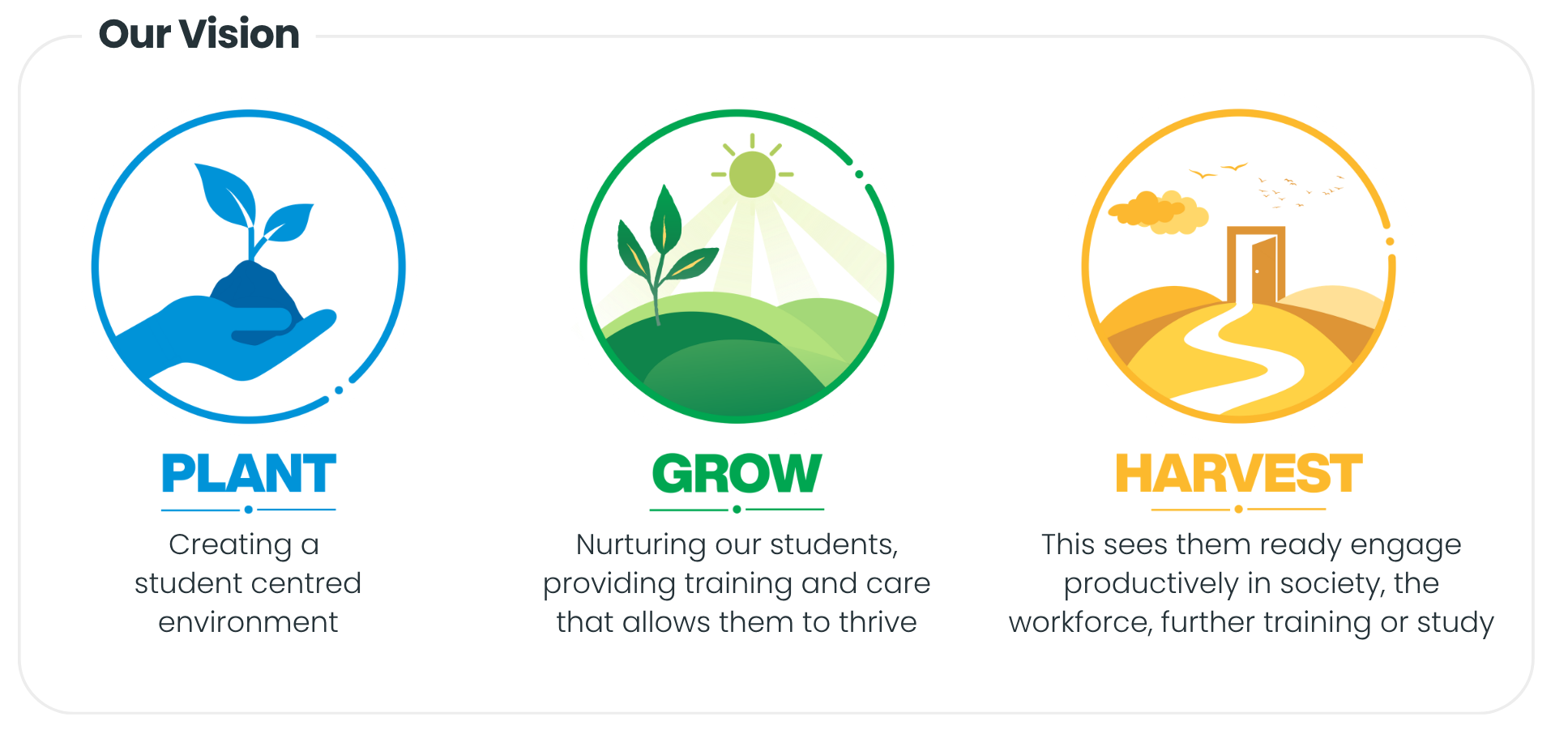
Our vision and mission is to be a provider of choice for secondary education and training in selected agricultural and related trades industries. At the WA College of Agriculture - Denmark, we provide opportunities for our students to achieve an Australian Tertiary Admissions Rank (ATAR), Secondary Graduation (WA Certificate of Education) and nationally recognised vocational qualifications within the context of selected agricultural and related industries.
We provide a place that allows our young people to thrive.
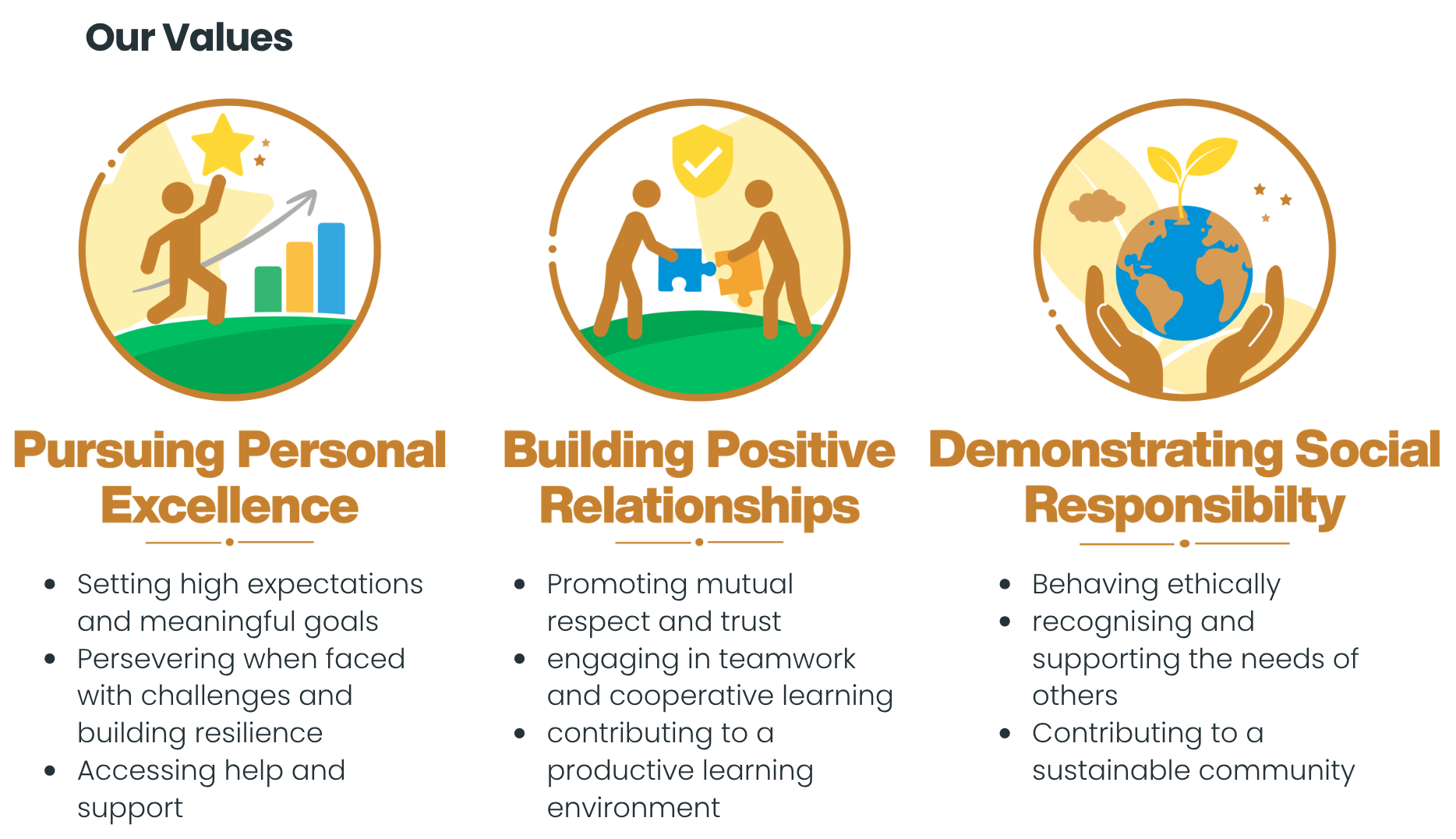
We are motivated to provide opportunities for students to develop positive attitudes, knowledge and skills that enable them to contribute to their communities, well after they leave the College. We encourage each and every student to seek personal excellence to achieve their individual potential.
What Guides Us